

QMATH · University of Copenhagen
Zhongxia
Shang 尚仲夏
Researcher in quantum computing
and quantum information.
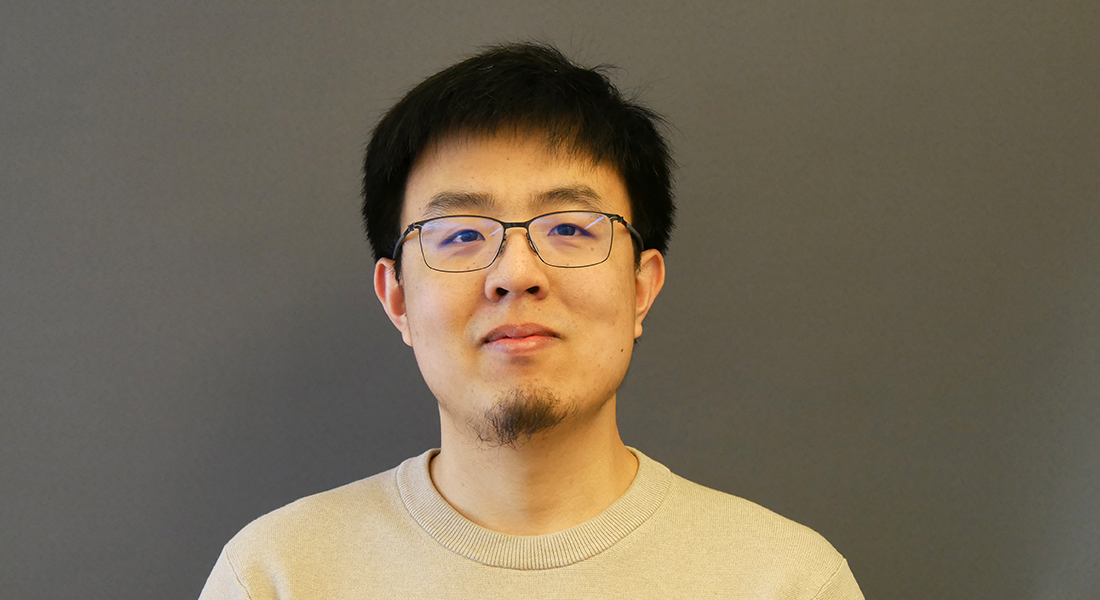
About me.
My name is Zhongxia Shang (or Zhong-Xia Shang used in publications). I am currently a postdoctoral researcher at QMATH at the University of Copenhagen hosted by Prof. Daniel Stilck França. Previously, I was an HKIQST postdoctoral fellow affiliated with the University of Hong Kong (HKU). My hosts were Prof. Wang Yao and Prof. Qi Zhao. I obtained my Ph.D. degree in Physics at University of Science and Technology of China (USTC) (2024). My advisor was Prof. Chao-Yang Lu. I also obtained my B.S. degree in Physics at the School of Gifted Young, USTC (2019).
I began my quantum journey on the experimental side of quantum computing, but later shifted my focus to the theoretical side, where I have been really enjoying designing new quantum algorithms and exploring quantum advantages. In my view, the current biggest bottleneck of quantum computing is the lack of applications. I hope to make quantum computing more useful and valuable by the day we finally create a universal fault-tolerant quantum computer!
Research updates.
- October 2026
- September 2026
New paper "Optimal Tolerant Testing of Lindbladian Dissipation"!
- September 2026
- September 2026
New paper "A Simple Quantum Linear-System Solver via Dissipation"!
- 2026
Paper "Bra-ket entanglement, an indicator bridging entanglement, magic, and coherence" got accepted as a contributed talk in AQIS 2026!
- 2026
Paper "Exponential Lindbladian fast forwarding and exponential amplification of certain Gibbs state properties" published in Reports on Progress in Physics!
- 2026
Paper "Decoherence-free quantum error mitigation by density matrix vectorization" published in PRResearch!
- 2026
New paper "Hamiltonian dynamics from pure dissipation"!
- 2025
Paper "Boson Sampling Enhanced Quantum Chemistry" published in PRX Quantum!
- 2025
Paper "Fast-forwardable Lindbladians imply quantum phase estimation" accepted as a contributed talk in QIP 2026!
- 2025
Paper "Designing a Nearly Optimal Quantum Algorithm for Linear Differential Equations via Lindbladians" published in Physical Review Letters and accepted as a contributed talk in AQIS 2025!
- 2024
Paper "A polynomial-time dissipation-based quantum algorithm for solving the ground states of a class of classically hard Hamiltonians" accepted as a contributed talk in AQIS 2024!
Publications & preprints.
No papers match this topic yet. Select All papers to browse the full list.
Most recent first
Optimal Tolerant Testing of Lindbladian Dissipation
arXiv:2609.38160 (2026)
A Simple Quantum Linear-System Solver via Dissipation
arXiv:2609.12284 (2026)
Decoherence-free quantum error mitigation by density matrix vectorization
Phys. Rev. Research 8, 023206 (2026)
Exponential Lindbladian fast forwarding and exponential amplification of certain Gibbs state properties
Rep. Prog. Phys. 89 057602 (2026)
Hamiltonian dynamics from pure dissipation
arXiv:2604.18533 (2026)
Boson sampling enhanced quantum chemistry
PRX Quantum 6 (4), 040357 (2025)
Fast-forwardable Lindbladians imply quantum phase estimation
arXiv:2510.06759 (2025)
Talk QIP 2026 · Contributed talk
Designing a Nearly Optimal Quantum Algorithm for Linear Differential Equations via Lindbladians
Physical Review Letters 135 (12), 120604 (2025)
Talk AQIS 2025 · Contributed talk
Bra-ket entanglement, an indicator bridging entanglement, magic, and coherence
arXiv:2505.09512 (2025)
Talk AQIS 2026 · Contributed talk
Pauli quantum computing: I as |0⟩ and X as |1⟩
arXiv:2412.03109 (2024)
Entanglement-induced exponential advantage in amplitude estimation via state matrixization
arXiv:2408.13721 (2024)
Hermitian-preserving ansatz and variational open quantum eigensolver
Physical Review A 109 (6), 062608 (2024)
Realization of fractional quantum Hall state with interacting photons
Science 384 (6695), 579-584 (2024)
A polynomial-time dissipation-based quantum algorithm for solving the ground states of a class of classically hard Hamiltonians
arXiv:2401.13946 (2024)
Talk AQIS 2024 · Contributed talk
Quantum computer-aided design for advanced superconducting qubit: Plasmonium
Science Bulletin 68 (15), 1625-1631 (2023)
Schrödinger-Heisenberg variational quantum algorithms
Physical Review Letters 131 (6), 060406 (2023)
Ruling out real-valued standard formalism of quantum theory
Physical Review Letters 128 (4), 040403 (2022)
Let’s talk quantum.
Interested in collaboration or a discussion about quantum algorithms?